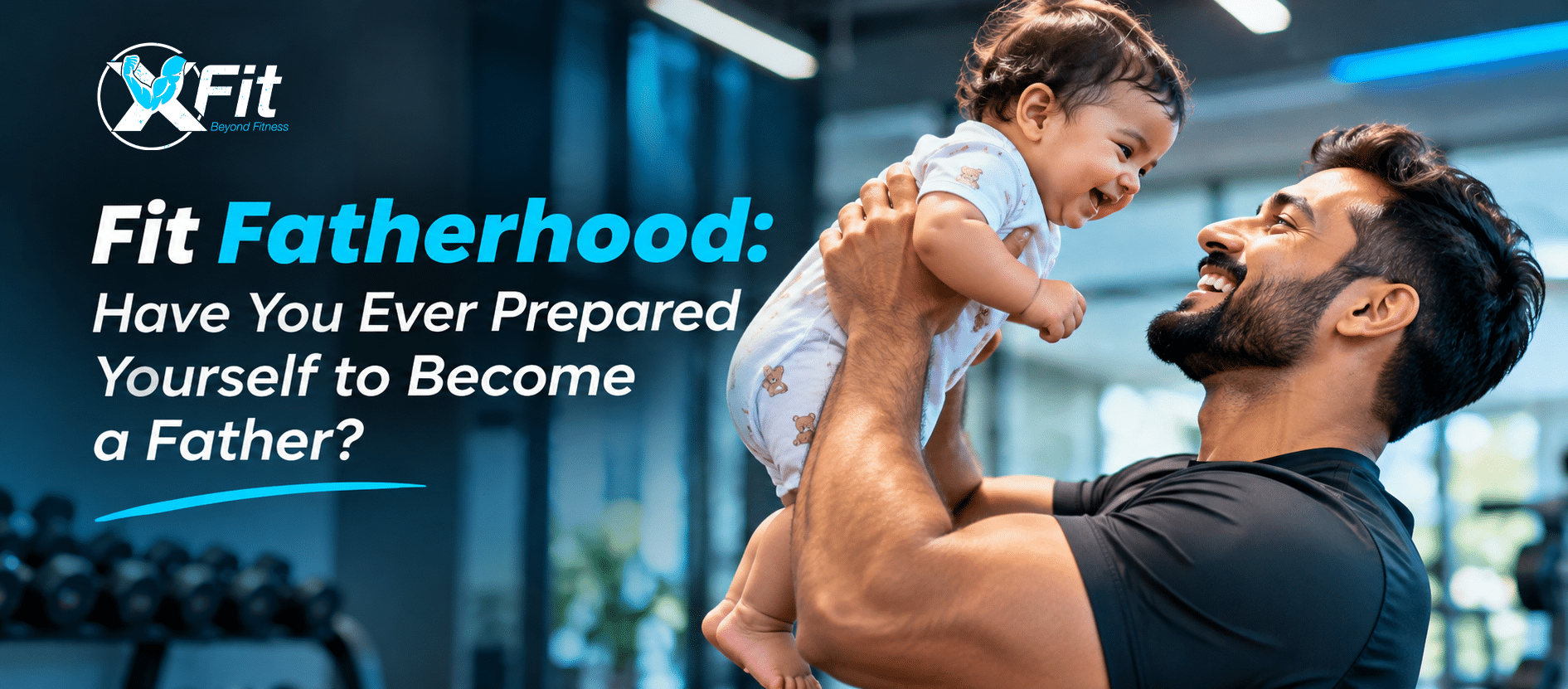
Fit Fatherhood: Have You Ever Prepared Yourself to Become a Father?
Have you ever prepared yourself to become a father?
When a mother is preparing her body to nurture a child, shouldn’t the father also prepare his mind and body to protect, support, and guide that child to grow into a healthy and productive adult?
At XFit, when an expectant mother comes for our Fit Motherhood Program, we ask one
question:
Why isn’t the father starting his fitness journey too?
Postpartum depression affects many mothers, and raising a newborn requires enormous physical and emotional support. Unlike some animals that can stand and walk shortly after birth, a human baby is completely dependent on others for survival.
Previously, families shared this responsibility. Grandparents, relatives, and other family members were there to support the mother and help raise the child.
But in the UAE, many expatriate families don’t have that support. In many households, there is no one other than the father to share these responsibilities.
Now imagine the father himself is struggling with poor sleep, anger, work-related stress, and health issues.
How is he going to support his partner and raise a child when he is struggling to manage himself?
This is why we designed the XFit Fit Fatherhood Program, to help men who are fathers or preparing to become fathers manage their physical health, mental well-being, and work-life balance through a structured fitness journey.
1. You Are Not the Same Person When You Don’t Sleep
Imagine you have worked for 11 hours, travelled another hour to reach home, and just when you are about to sleep, your baby starts crying.
You wake up, help your partner, and somehow manage to get a few hours of sleep before going back to work.
Now repeat this for several weeks.
Do you think you will have the same patience, concentration, and emotional control?
Sleep deprivation affects the prefrontal cortex, the part of the brain involved in decisionmaking, attention, and emotional regulation.
Research shows that insufficient sleep can increase irritability, reduce concentration, and make it harder to manage emotional reactions.
Sometimes what looks like an anger problem is made worse by an exhausted brain.
You cannot always control how many times your newborn wakes up. But you can learn to manage your recovery, improve your existing sleep habits, and adjust your daily activities according to your physical condition.
At XFit, we focus on sleep education, recovery, and exercise planning so that fitness becomes a support system rather than another source of exhaustion.
2. Postpartum Depression Is Not Only a Mother’s Problem
When we hear the term postpartum depression, we usually think about mothers.
But did you know that fathers can experience depression during pregnancy and after childbirth too?
Research estimates that approximately one in ten fathers experiences depression during the prenatal or postpartum period, although the numbers vary between studies.
Now consider a family where the mother is recovering from childbirth, the baby requires constant attention, and the father is dealing with financial pressure, work responsibilities, and insufficient sleep.
Who is taking care of the father’s mental health?
And what happens when both parents are struggling at the same time?
A father’s psychological well-being can influence his relationship with his partner, his involvement in childcare, and the emotional environment in which the child grows.
Exercise cannot solve every psychological problem. But scientific research supports regular physical activity as a way to help reduce symptoms of depression and anxiety and improve overall mental well-being.
Through the XFit Fit Fatherhood Program, we aim to help fathers develop regular exercise habits, manage everyday stress, and recognize when they need additional support.
And when someone is experiencing depression or significant anxiety, professional mental healthcare remains essential.
A father does not have to ignore his own health to take care of his family.
3. Your Body and Brain Are Also Preparing for Fatherhood
We all know about the hormonal and physical changes a woman experiences during pregnancy.
But did you know that becoming a father can also be associated with biological changes in men?
Research has observed changes in testosterone levels among some men transitioning into fatherhood. Studies have also identified changes in brain regions involved in emotional processing, social understanding, and caregiving.
In other words, fatherhood is not simply a new responsibility you accept. It can also be a biological transition.
But imagine entering this stage of life while already dealing with chronic stress, poor nutrition, insufficient sleep, and years of physical inactivity.
These lifestyle factors can affect your overall health, energy, and psychological well-being.
We cannot control every biological change associated with fatherhood, and exercise is not a method of controlling those changes.
But we can improve the lifestyle we bring into this new stage.
At XFit, our approach focuses on regular physical activity, healthier nutrition, stress management, and recovery to help fathers maintain their health during this transition.
You cannot predict every challenge fatherhood will bring. But you can prepare yourself to handle challenges better.
4. Your Child Will Learn From What You Do, Not Just What You Say
Imagine telling your child not to spend too much time on the phone while you spend every evening scrolling through yours.
Or telling your child to eat healthy food when you regularly skip meals and depend on fastfood.
Or asking your child to become physically active when they have never seen you exercise.
Do you think children develop their habits only by listening to instructions?
Children learn many behaviors by observing their parents.
Social learning theory explains how people acquire behaviors through observation and imitation. Research also suggests that parental support and involvement are associated with children’s physical activity habits.
Your child may not understand what cardiovascular health means. They may not know why strength training is important or why sleep matters.
But they can observe your routines.
A father who makes time for exercise, follows healthier eating habits, and manages his daily routine can help create an environment where those behaviors become normal.
This is another important objective of XFit’s Fit Fatherhood Program.
We are not preparing fathers for a few months after childbirth. We want to help them build habits they can carry throughout their children’s lives.
Because your lifestyle can become part of the environment in which your child grows up.
Are You Preparing Everything Except Yourself?
Before a child is born, we start preparing.
We arrange a home, buy clothes, prepare the baby’s room, save money, and plan for education.
Some parents even start planning which school their child will attend years before the child is ready.
But how many fathers think about their own health?
How many prepare themselves to manage sleepless nights, work pressure, emotional stress, and the responsibilities of raising a child?
At XFit, we believe preparing for fatherhood should include preparing yourself.
The Fit Fatherhood Program is designed to help men develop healthier routines, improve physical fitness, manage stress, and build a sustainable balance between their professional and family responsibilities.
We are not promising that fitness will make fatherhood easy.
There will still be sleepless nights, unexpected responsibilities, and difficult days.
But being physically active, understanding your own health, and learning to manage stress can help you face those responsibilities with better preparation.
You spend years preparing to give your child a better future.
Why not spend some time preparing yourself to be part of that future?